
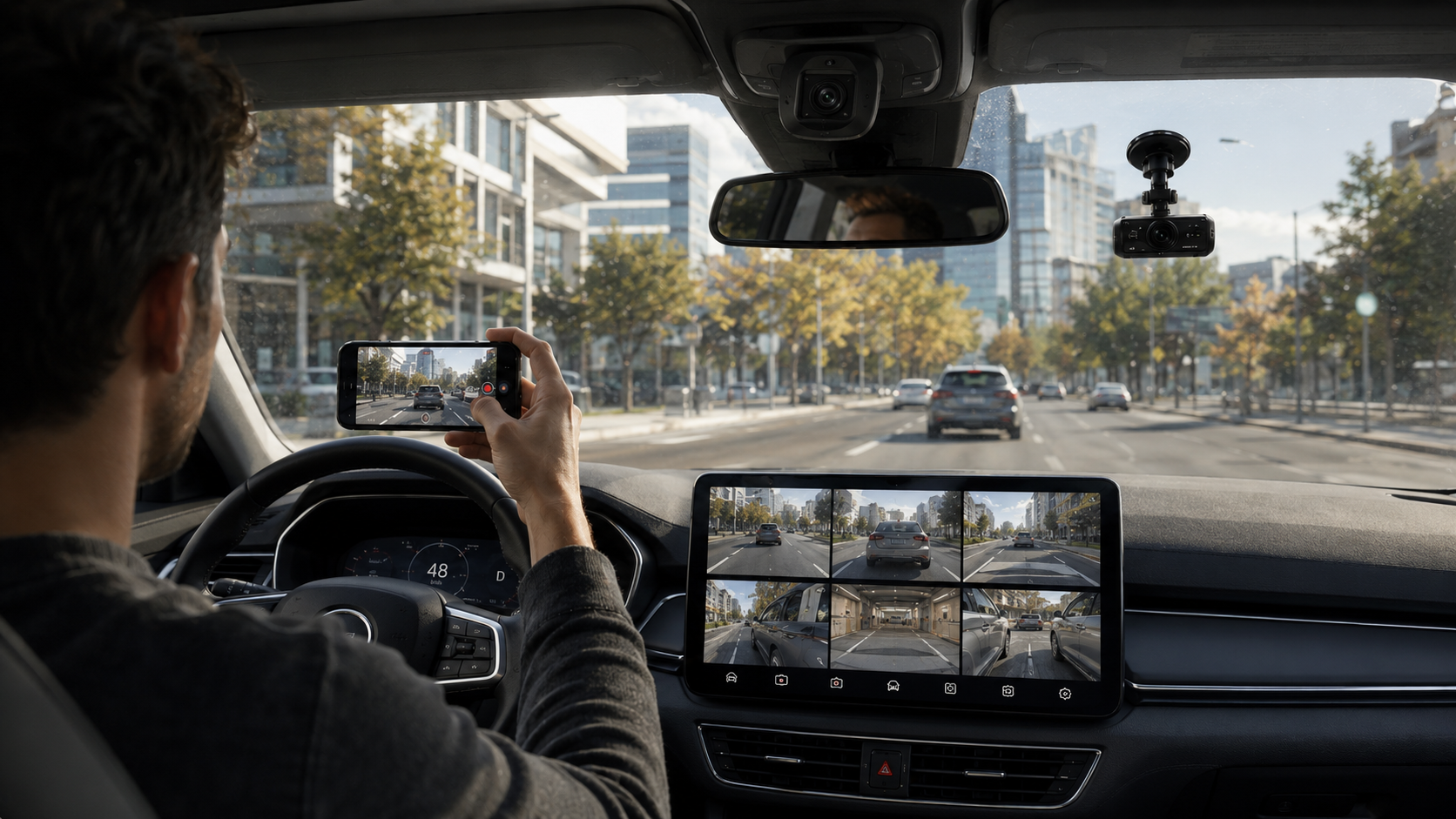
Rethinking Vehicle Cameras
Modern vehicle camera systems evolved across safety, monitoring, recording, and personal media use cases.
Yet many experiences still exist as fragmented products instead of one contextual system.
Role Senior HMI Concept Lead
Scope In Vehicle Camera Ecosystem Strategy
Industry Global Automotive Mobility
Disclaimer
This is an independent conceptual case study created privately and solely for exploratory portfolio purposes.
The project is not affiliated with, commissioned by, or representative of BMW Group or any related organization. All concepts shown are fictional interpretations based on publicly available information and personal research.
Multiple
Camera
Features.
No Shared
Experience.
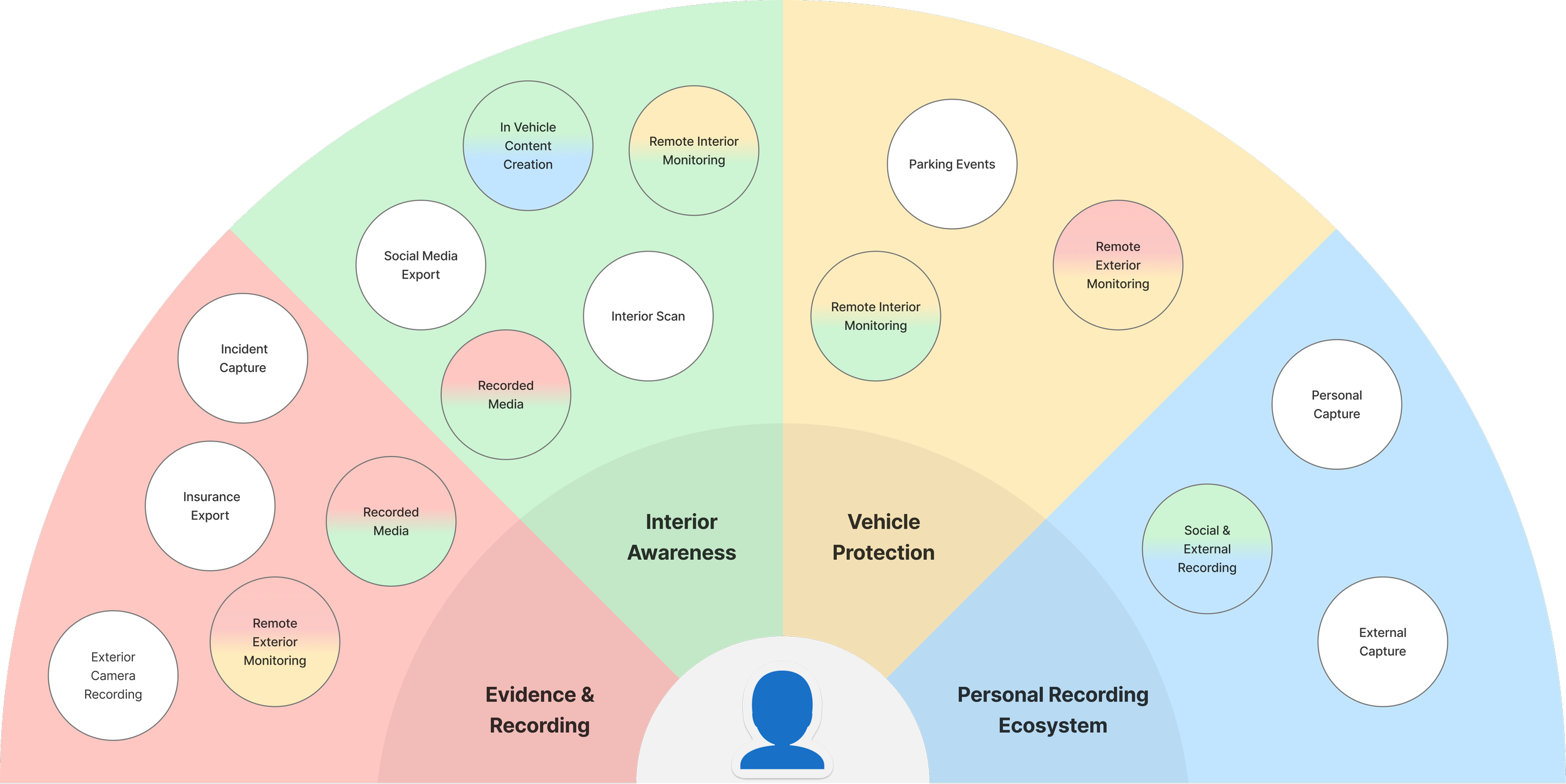
Vehicle camera experiences evolved feature by feature across disconnected product domains.
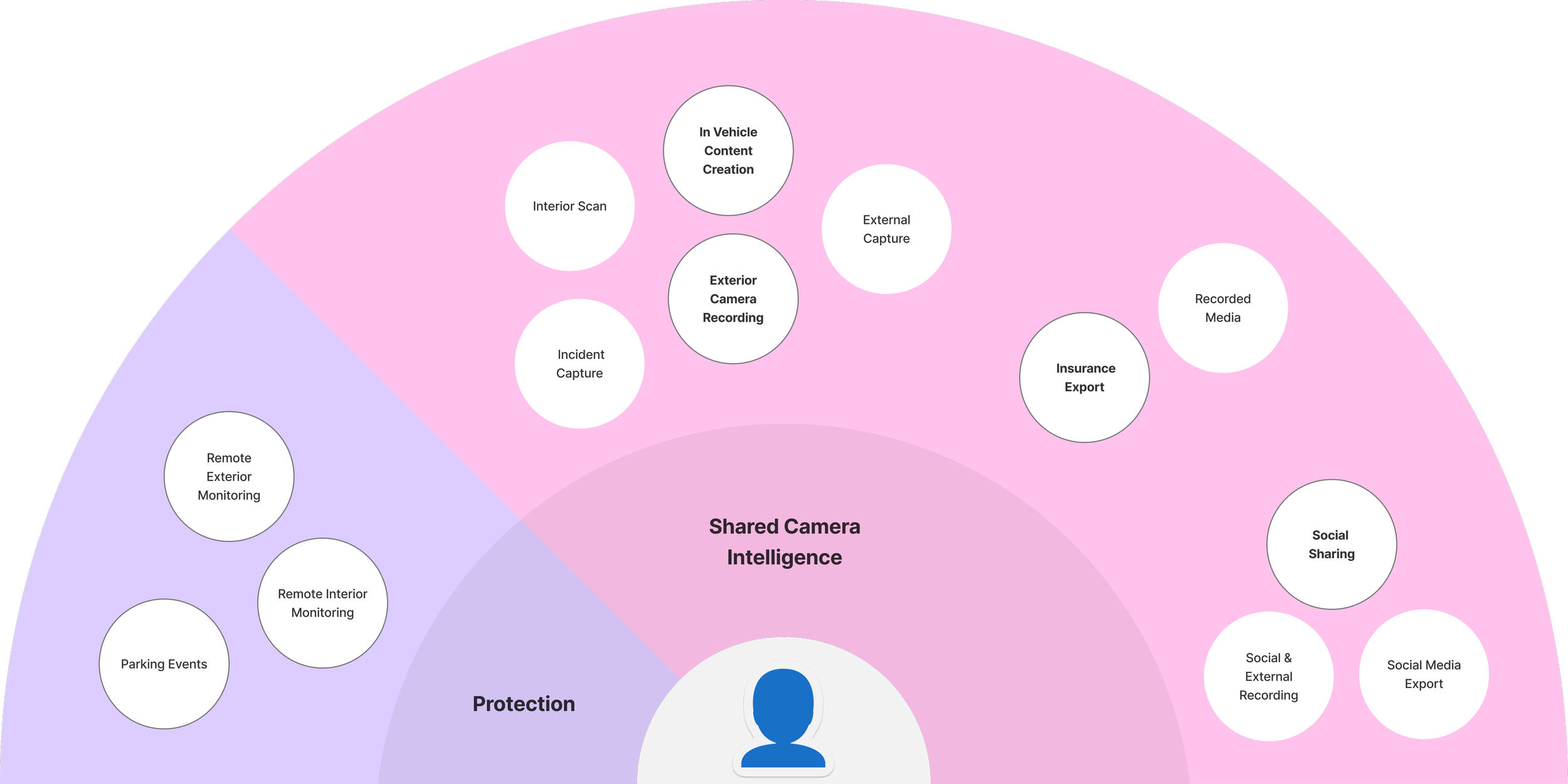
Shared camera intelligence enables contextual experiences instead of isolated camera products.
From Apps
to Context
Reduced Cognitive Load
Users no longer need to understand separate camera products and overlapping feature ownership.
Shared Media Logic
Recording, exporting, and reviewing follow one unified interaction model.
Context Aware
The same camera infrastructure adapts across safety, protection, and personal moments.
Event Driven
The system reacts to situations instead of requiring manual app selection.
Benchmark Snapshot
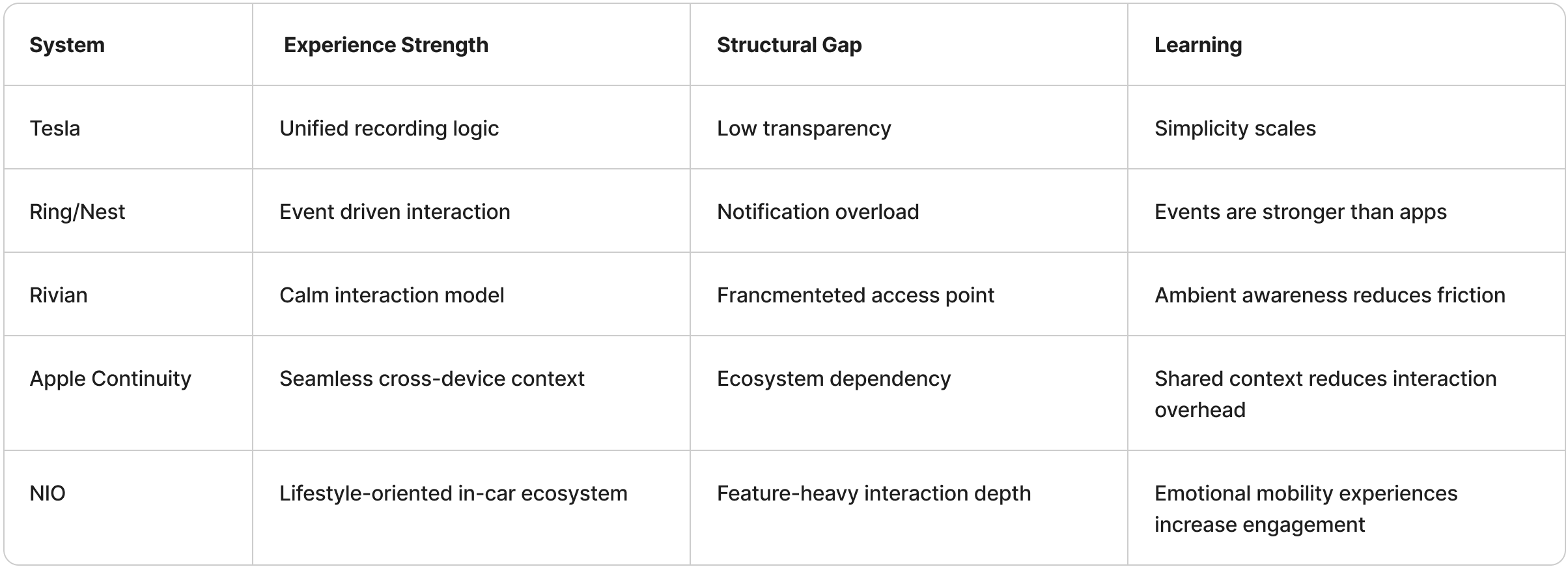
Learnings
Context scales better than features
As camera capabilities grow, users no longer think in isolated products. They expect systems to adapt intelligently to situations, intent, and context.Shared logic reduces cognitive friction
Unified recording, monitoring, review, and export flows reduce mental overhead and create more predictable interactions across the ecosystem.Event-driven systems create more natural experiences
The strongest camera experiences are structured around moments and events, not around manually selected apps or hardware boundaries.
UX Hypothesis
As vehicle camera systems continue to expand across safety, monitoring, and personal recording use cases, many experiences are still structured around isolated features instead of connected user intentions.
This hypothesis explores a shift from product-centric camera apps toward a unified contextual experience model:
“Users do not think in isolated camera products. They think in events, safety, awareness, and moments worth capturing.”
Proposed System
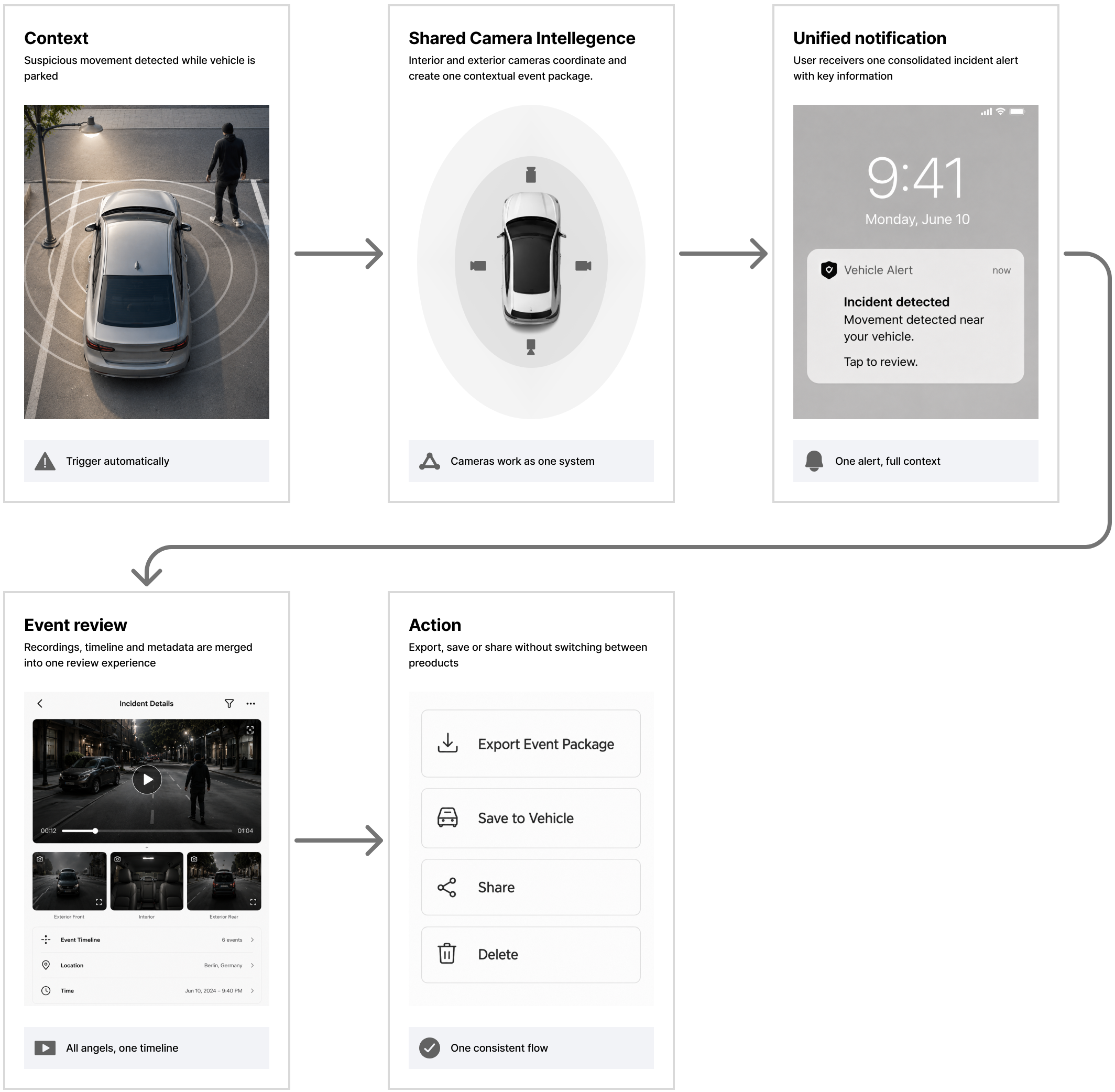
Instead of separating recording, monitoring, protection, and media capture into isolated products, the proposed system introduces a shared camera intelligence layer built around contextual events, unified media handling, and cross-camera orchestration.
Context Aware Experiences
The same camera infrastructure adapts dynamically across protection, recording, monitoring and personal content creation
without requiring users to navigate between separate products.
Shared Media Infrastructure
Interior, exterior, and contextual recordings are handled through one shared media system with unified review, export, and retention logic.
Unified Event Model
All camera systems react through one shared event architecture instead of isolated product logic.
Event Flow
Parking Incident While Vehicle Is Unattended
Outcomes
Unified Mental Model
Users no longer need to understand separate camera products, overlapping ownership, or fragmented interaction patterns across monitoring, recording, and protection features.
Reduced Interaction Complexity
Recording, reviewing, exporting, and sharing follow one consistent system logic instead of multiple disconnected workflows and entry points.
Scalable Camera Architecture
New camera capabilities can integrate into a shared contextual ecosystem without introducing additional standalone products or interaction models.
Increased Trust & Transparency
Unified permissions, recording behavior, and event handling create clearer expectations around privacy, ownership, and system behavior.